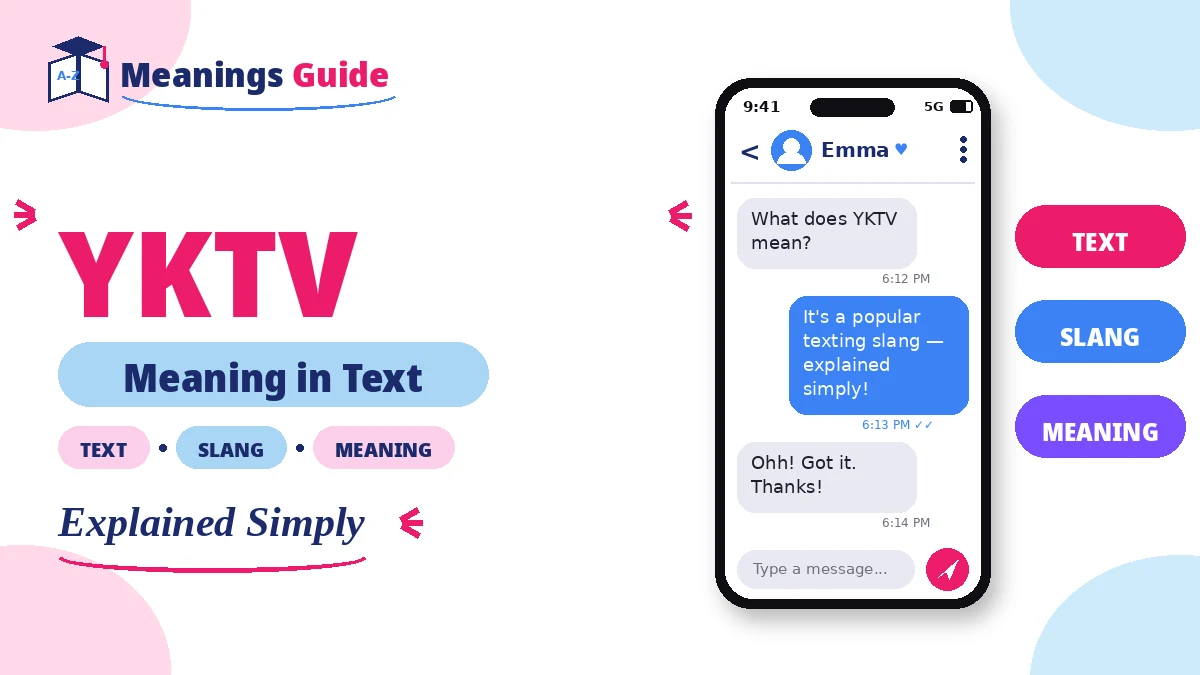
When someone sends you “YKTV” in a text, comment, or DM, it can look like a random mix of letters. You may wonder if it is a typo, a secret code, or some new internet slang. If you have seen “YKTV” on TikTok, Instagram, Snapchat, dating apps, or group chats, you are not alone in asking what it means.
The good news is that YKTV meaning in text is usually simple. In most online conversations, YKTV means “You Know the Vibes.” People use it to say that someone already understands the mood, feeling, situation, or shared experience.
The exact tone can change with the conversation. It can sound confident, playful, friendly, funny, or even flirty. Sometimes people use it after talking about plans, music, fashion, nightlife, relationships, or an inside joke.
This guide explains what YKTV means, where it comes from in everyday texting culture, how people use it, and how you can reply without overthinking it.
What Does “YKTV” Mean in Text?
YKTV usually means “You Know the Vibes.” It is casual internet slang used when someone believes another person already understands the mood, situation, energy, or shared feeling. Depending on context, it can also be read as “You Know the Vibe” or a similar phrase with the same basic idea.
Common interpretations include:
- You Know the Vibes — the most common meaning.
- You Know the Vibe — a shorter version with the same idea.
- You Know the Vibes as a way to show shared understanding.
- A casual phrase meaning “You already know what I mean.”
For example, if a friend says, “Late-night drive, good music, no plans. YKTV,” they mean that you understand the feeling they are describing.
The Most Common Meanings of “YKTV”

1. You Know the Vibes
This is the main meaning of YKTV in texting.
Here, “vibes” means the mood, energy, feeling, or overall atmosphere of something. The person does not need to explain everything because they believe you already understand.
Example:
“Pizza, movies, and no homework tonight. YKTV.”
The person means:
“You know the vibes.”
It is similar to saying, “You already get the feeling.”
This use is very common in casual texting and social media captions.
2. You Know the Vibe
Sometimes people use YKTV even when they personally interpret the final letters as “You Know the Vibe.” This is less exact as an acronym because the final “V” can represent either “vibe” or “vibes” depending on the speaker.
The meaning is still almost the same.
Example:
“Beach day with the crew. YKTV.”
The message suggests that the person expects others to understand how fun, relaxed, or exciting the situation feels.
3. You Already Understand the Situation
YKTV can also work like a shortcut for “You know what I mean.”
The person may not be talking about a literal mood. Instead, they may be pointing to a shared situation.
Example:
“When the teacher says there is no homework… YKTV.”
The phrase means that everyone understands the feeling.
In this use, YKTV is less about a specific “vibe” and more about shared knowledge.
4. A Shared Inside Feeling
Friends may use YKTV when they have a shared memory or inside joke.
Example:
“That one song from our road trip. YKTV.”
The sender expects the other person to remember the moment without needing a long explanation.
This makes YKTV useful in close friendships because a few letters can replace a whole sentence.
5. A Confident or Playful Statement
YKTV can also add confidence to a message.
Example:
“We know where the best food is. YKTV.”
Here, the phrase adds a sense of confidence and group identity.
It can sound like:
“You already know how we do things.”
The exact feeling depends on who says it and what came before it.
How “YKTV” Is Used in Real Conversations
Friends & Casual Texting
Among friends, YKTV is usually relaxed and easygoing.
A friend may use it after making plans, sharing a funny story, talking about food, or describing a weekend.
Examples:
“Game night at my place. YKTV.”
“Good food, good music, good people. YKTV.”
“We are going out Friday. YKTV.”
The phrase creates a feeling of shared understanding. Instead of explaining why something is fun, the sender assumes the other person already knows.
It can also be used after a statement that only close friends understand.
Example:
“Remember what happened last summer? YKTV.”
In that case, YKTV almost means, “You remember. No explanation needed.”
Instagram & Snapchat
YKTV fits naturally on visual social platforms because people often use short captions.
Someone might post a photo of a vacation, concert, outfit, restaurant, car, sunset, or night out and add “YKTV.”
The caption tells followers that the image represents a certain feeling or lifestyle.
Example:
“Friday night. YKTV.”
Or:
“Summer nights. YKTV.”
It may also appear in comments.
Example:
“This place is different. YKTV.”
A friend may use it to show that they understand exactly what makes the place special.
On social media, YKTV is often less about giving information and more about expressing a shared mood.
Dating Apps
YKTV can have a playful or flirty tone on dating apps.
Suppose someone writes:
“Good food, late-night walks, and random adventures. YKTV.”
They may be describing the type of connection or lifestyle they enjoy.
A person could also send:
“You looked good in that picture. YKTV.”
Here, context matters a lot. YKTV itself is not automatically romantic or sexual. The surrounding message determines whether it feels flirty.
If someone sends YKTV after a joke or playful comment, it may simply mean, “You get me.”
If the conversation is already romantic, the same phrase may feel more personal.
Gaming & Online Communities
Gamers and online communities can use YKTV when talking about a shared experience.
For example:
“Winning with the squad after three hours. YKTV.”
Or:
“That final boss fight was crazy. YKTV.”
The sender assumes other players understand the feeling.
This is common with slang because online groups often develop shared language. Short expressions help people communicate quickly without explaining something everyone in the group already knows.
YKTV can also be used after an experience that only regular members of the community understand.
Work or Professional Chat
YKTV is less suitable for formal work communication.
A close group of coworkers might understand it in a casual group chat, but it should not normally appear in an email to a client, manager, customer, or business partner.
For example, instead of:
“Big deadline tomorrow. YKTV.”
a professional message would be clearer as:
“We all know how busy things will be tomorrow.”
The problem is not that YKTV is offensive. The problem is that it is informal and can be unclear to people who do not know internet slang.
Is “YKTV” Rude, Flirty, or Offensive?
YKTV is usually not rude or offensive. It is a casual phrase that normally creates a feeling of shared understanding.
However, tone depends on context.
When YKTV Feels Positive
YKTV can feel friendly when someone uses it with friends or people who share the same interests.
Example:
“Pizza after the game. YKTV.”
This sounds relaxed and positive.
It can also make a conversation feel more personal because the sender is saying, in effect, “You understand this.”
When YKTV Feels Funny
YKTV can be used as a joke.
Example:
“Five minutes before the exam and I suddenly remember nothing. YKTV.”
The sender is using the phrase to invite others to relate to the situation.
When YKTV Feels Flirty
YKTV can have a flirty tone when the surrounding conversation is romantic.
For example:
“You know exactly what I mean. YKTV.”
If two people already have a playful connection, YKTV may feel like a private signal of shared understanding.
Still, the acronym itself does not automatically mean flirting.
When YKTV Can Feel Negative
The phrase can sound slightly dismissive if someone uses it to avoid explaining something.
For example:
“I told you what happened. YKTV.”
Depending on the conversation, that could sound like, “You already know, so stop asking.”
A sarcastic use can also change the tone.
That is why you should look at the full message instead of judging YKTV by itself.
How to Respond When Someone Says “YKTV”
Your response should match the tone of the conversation. You do not need a complicated answer.
Casual Replies
If a friend sends YKTV, you can respond naturally:
- “Exactly.”
- “You already know.”
- “For real.”
- “Facts.”
- “I know the vibe.”
- “Say less.”
- “Always.”
Funny Replies
If the conversation is playful, try:
- “I definitely know the vibes.”
- “The vibes are understood.”
- “Loud and clear.”
- “No explanation needed.”
- “You already know me.”
A funny response works best when the original message is already casual.
Neutral Replies
If you are not sure what the person means, you can simply ask:
- “Haha, what vibe?”
- “What do you mean?”
- “I get you.”
- “Got it.”
Asking is perfectly fine, especially if you are unfamiliar with the slang.
Professional Replies
If YKTV appears in a casual workplace chat and you understand it, you can respond normally without copying the slang.
For example:
“Yep, I know what you mean.”
Or:
“Understood.”
This keeps the conversation clear without forcing slang into a professional setting.
Common Misunderstandings About “YKTV”
YKTV Is Not Always a Secret Code
Some people see four capital letters and assume YKTV has a complicated hidden meaning.
Usually, it does not.
It is simply a shortened internet phrase: “You Know the Vibes.”
YKTV Does Not Always Mean Something Romantic
A person may use YKTV with friends, family, gaming groups, followers, or coworkers.
Do not assume someone is flirting just because they wrote YKTV.
Look at the surrounding conversation.
YKTV Does Not Mean the Same Thing in Every Situation
Internet slang is flexible.
People sometimes create their own interpretations or use acronyms differently inside a particular friend group.
If the message does not make sense, context is more useful than guessing.
Do Not Confuse YKTV With Similar Acronyms
YKTV can look similar to other short texting terms because many internet acronyms use the same letters.
For example, “YK” commonly means “you know,” while “YKT” may be used as “you know that.”
Adding the “V” changes the phrase toward “vibe” or “vibes.”
The safest way to understand YKTV is to read the entire message.
Capital Letters Do Not Make It More Serious
People often write YKTV in capital letters because acronyms are commonly written that way.
The capitalization does not usually indicate anger, shouting, or seriousness.
Similar Slang Terms You Should Know
Here are some related texting terms that can appear in the same type of conversation:
- YK — Usually means “you know.”
- IK — Means “I know.”
- IKR — Means “I know, right?” and shows agreement.
- IDC — Means “I don’t care.”
- TBH — Means “to be honest.”
- NGL — Means “not gonna lie.”
- FR — Means “for real.”
- ONG — Often means “on God,” used to strongly emphasize that someone is telling the truth.
- ISTG — Means “I swear to God,” often used for strong emphasis.
- WYD — Means “what you doing?” and is common in casual texting.
- HMU — Means “hit me up,” usually inviting someone to contact you.
- FS — Often means “for sure” in casual online conversations.
These terms are not exact replacements for YKTV. They simply belong to the same broad world of short internet language.
When You Should Avoid Using “YKTV”

YKTV is easy to understand once you know it, but that does not mean it belongs in every conversation.
Professional Settings
Avoid YKTV in formal emails, reports, applications, business proposals, customer messages, and official documents.
The reader may not know the acronym.
Clear language is usually better at work.
Instead of:
“YKTV, this deadline is tough.”
write:
“As you know, this is a tight deadline.”
That version is clearer and more professional.
Cross-Cultural Chats
Not everyone who speaks English knows the same internet slang.
Someone who is learning English may understand every word in “You Know the Vibes” but still not understand YKTV.
If you are talking with someone from a different language or cultural background, using the full phrase can prevent confusion.
Sensitive Situations
Avoid slang when discussing serious topics, conflict, grief, emergencies, or other sensitive matters.
A short acronym can make an important message sound careless or unclear.
For serious conversations, direct language is usually the better choice.
With People You Do Not Know Well
If you are texting someone for the first time, YKTV may not be the best choice.
They may understand it, but they may also wonder what you mean.
As you become more familiar with their texting style, you can decide whether slang fits the conversation.
In School or Formal Writing
Do not use YKTV in essays, academic work, exams, or formal assignments unless the topic specifically involves internet slang.
Texting language is designed for quick, informal communication. Formal writing needs clearer language.
FAQs
What does YKTV mean in text?
YKTV usually means “You Know the Vibes.” It is casual slang used when someone believes another person already understands the mood, feeling, situation, or shared experience.
What does YKTV mean on Snapchat?
On Snapchat, YKTV usually means “You Know the Vibes.” People may use it in messages, captions, or replies when they want to express a shared mood or inside understanding.
Is YKTV slang?
Yes. YKTV is internet and texting slang. It is mainly used in casual conversations, social media posts, DMs, comments, and group chats.
Does YKTV mean “you know the vibe”?
It can be interpreted that way, but “You Know the Vibes” is the more common expansion. Both versions communicate a similar idea: the other person already understands the feeling or situation.
Is YKTV flirty?
Not automatically. YKTV can be friendly, funny, casual, or flirty depending on the conversation. If it appears during romantic or playful texting, it may carry a flirty tone.
Is YKTV rude?
Usually, no. YKTV is normally harmless casual slang. However, it can sound dismissive or sarcastic if someone uses it to avoid explaining something or to shut down a question.
How should I reply to YKTV?
You can reply with “Exactly,” “You already know,” “Facts,” or “Say less.” If you do not understand the context, simply ask, “What vibe?” or “What do you mean?”
Final Thoughts.
YKTV is one of those short internet expressions that can look confusing until you know the phrase behind it. In most texting and social media conversations, YKTV means “You Know the Vibes.”
The phrase is usually used to show shared understanding. Someone may use it when talking about a fun plan, a favorite song, a night out, an inside joke, a relationship, a gaming moment, or almost anything else where the other person already understands the feeling.
The important thing is context. YKTV is not automatically rude, romantic, sarcastic, or serious. The people involved, the previous messages, and the situation all help determine the real tone.
If a friend sends “YKTV,” you usually do not need to overthink it. They are most likely saying that you already understand the mood or situation.
Use it with friends and in casual online spaces when it fits your normal texting style. For formal, professional, or sensitive conversations, choose clear words instead.
Once you understand the phrase, YKTV is simple: you know the vibes.

Evelyn Hartwell is a content writer and language enthusiast who creates clear, easy-to-understand explanations of English words and phrases. She enjoys helping readers build vocabulary and understand everyday language with confidence.